Last week, someone asked me if it’s okay to feel grumpy and lazy in December.
And I was like “Sure, that’s all because of your melatonin”.
But they were like “Huh? The sleep pill?”
This is why I made this post — to help you master your winter rhythm and mood without self-blaming for laziness.
I double checked with recent studies that what I tell you here is still relevant. I didn’t add more links than the one on statistics because I believe no one is reading them anyway. Enjoy.
Most people feel worse in the wintertime.
- We feel sleepier, tend to stay in bed longer, or have more difficulty waking up.
- We have more sad, depressive, and lethargic moods.
- We struggle with staying focused and active.
Winter blues vs Seasonal Affective Disorder (SAD)
(such a nice abbreviation, don’t you think?)
For most people, this “winter lazy mode” makes it harder to keep up with daily tasks and productivity demands.
5% — have it as a clinical condition (SAD).
9,37% — feel significantly altered mood state without full SAD symptoms.
85,6% — might feel off occasionally.
For many, it can be influenced by lifestyle changes.
Data from here https://doi.org/10.1016/j.jad.2025.119807
Why is this happening to everyone?
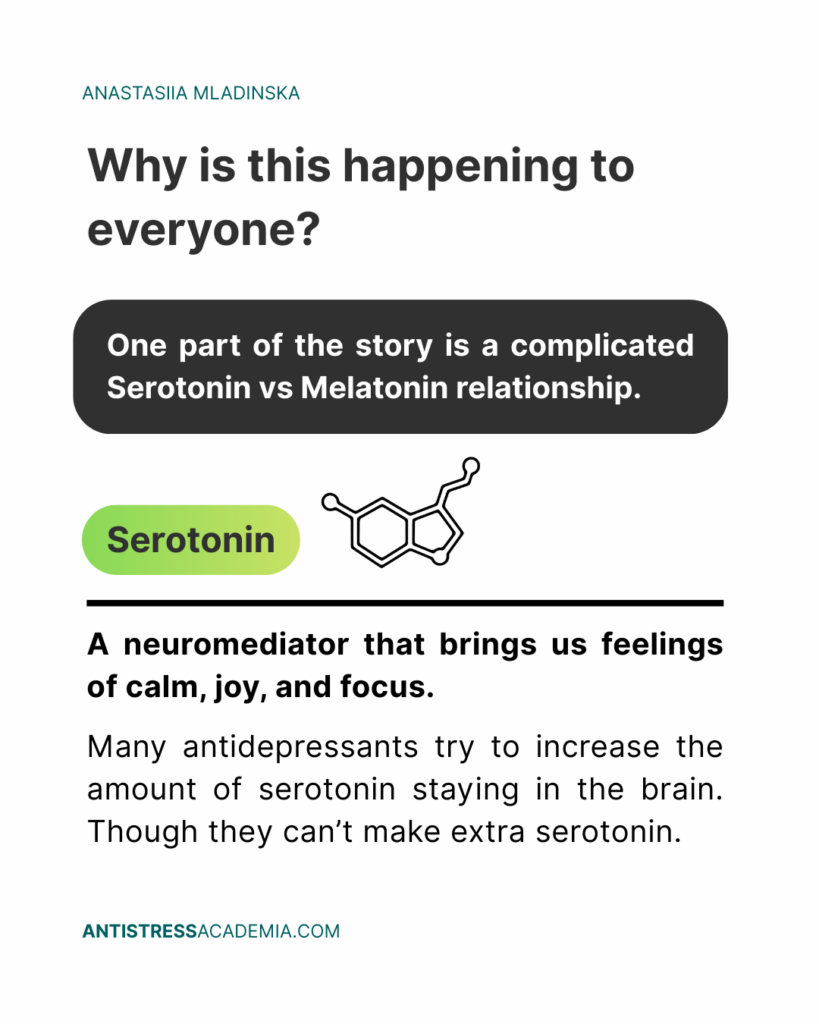
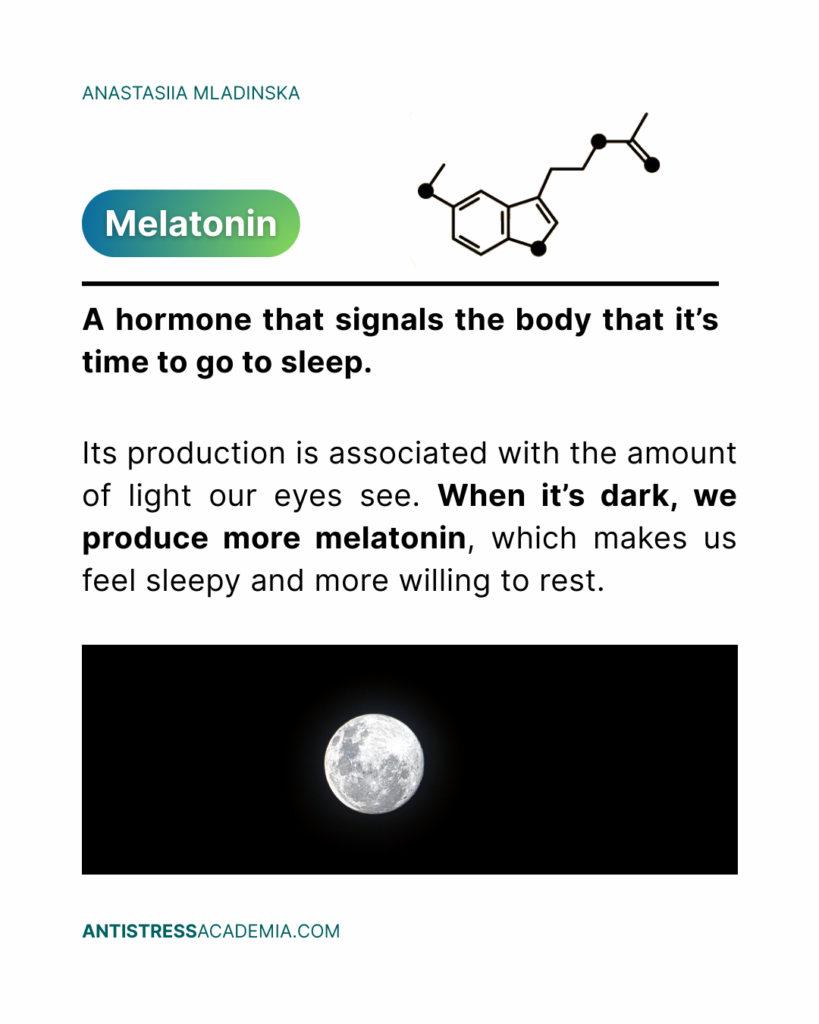
One part of this story is a complicated Serotonin vs Melatonin relationship.
- Serotonin — is a neuromediator that brings us feelings of calm, joy, and focus.
Many antidepressants try to increase the amount of serotonin staying in the brain. Though they can’t make extra serotonin.
- Melatonin — is a hormone that signals the body to go to sleep.
Its production is associated with the amount of light our eyes see. When it’s dark, we produce more melatonin, which makes us feel sleepy and more willing to rest.
The problem is… that our body makes melatonin from serotonin.
Protein from food >
Tryptophan >
5-HTP >
Serotonin >
NAS >
Melatonin
In the winter, there are more dark hours during the day.
We also tend to spend more time inside.
This is how our body is triggered to produce more melatonin, which in turn makes us sleepier and less focused.
But also, to make more melatonin, we use more serotonin. That’s why in winter we’re left with less serotonin for feeling happy and focused.
Five things I really try to do in winter to feel better and help my body cope with changes

1. Expose myself to the light during daytime, especially by going outside when it’s sunny and by increasing blue-ish indoor lights.

2. Eat a bit more tryptophan-rich food.
We make serotonin from tryptophan, an essential amino acid that we can get from food but can’t synthesize in our body. That’s dairy, eggs, fish, turkey, some nuts and seed. Don’t go too hard on those, and don’t quit other normal food categories.

3. Stay physically active. In winter, I try to do sports earlier in the morning, because activity signals our brain that it is day, not night.

4. Reduce my stress levels proactively — I want to stay active thanks to cortisol but not too anxious, tense or irritated.
That’s important because unhealthy amount of stress is messing up with hormones and disrupts sleep-wake cycle.

5. Expect less of myself.
In winter, I often feel less focused and motivated in the early morning and evening (when it’s dark).
That’s why I:
• plan less cognitive tasks
• do the most complicated ones during daylight.

If you’ve been doing your best but still feel stuck with motivation, focus, or stress — you’re so not alone.
Let’s find personalized solutions that hep you feel more energized, calm and in control of your life.
For the past 8 years, I’ve been helping people feel better, function better and get the life they want. If you’d like to talk, you’re welcome to message me.
Want to learn more about services or sign up for a session?
Message me or sign up for a free introductory call via the form