Do you know someone who always seems to be on guard, uneasy, and bodily tensed? They can’t name any obvious reason why they can’t relax, even at home. It’s just that some time ago, they started constantly thinking and worrying about their physical safety. They try to prevent their body from any damage.
I would describe this as a heightened need to protect the body’s boundaries and sense of physical safety.
- They may overreact when seeing a small scratch on the skin.
- Or suddenly fear needles, so a casual blood test becomes a nightmare.
- They may feel a massive emotional hit when visiting any doctor – nervousness, distrust, shaking, sweating, heart pumping.
“Why am I so nervous to discuss vitamin D supplements with my family doctor?
When we explore their personal story, there might be no or little history of traumatizing physical harm.
So why does their body react as if it’s under physical threat?
One possible explanation may be their history of surgery.
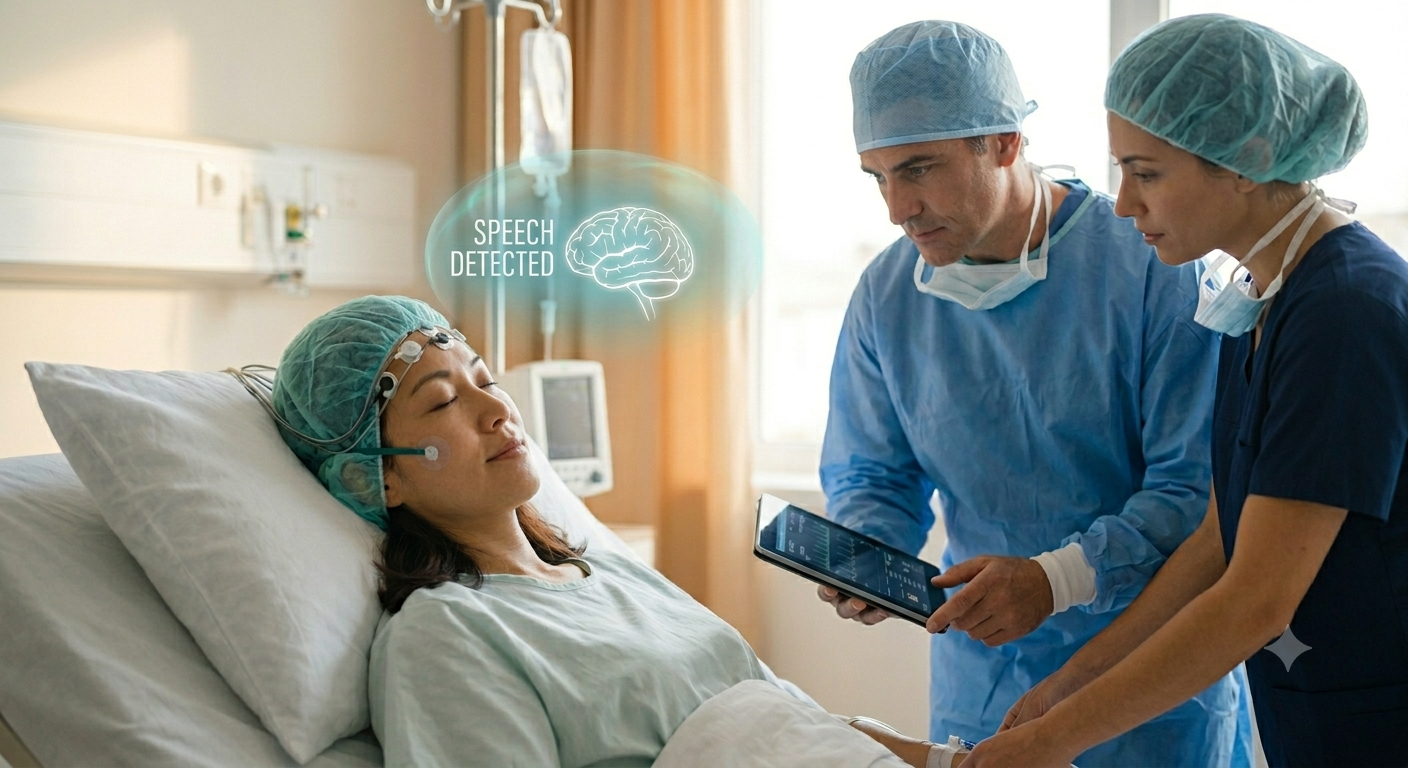
For a long time, we believed that people under anesthesia (= unconscious) can’t understand human speech. The study published in Nature by Katlowitz et al (2026) challenges this idea.
Apparently, the hippocampus, a part of our brain, understands and remembers the sense of what it heard while conscious “you” were out.
Now, picture what happens during a typical surgery.
I asked Gemini to help me make up a dialogue.
- Doctor: Okay, let’s crank this open so we can see what we’re dealing with.
- Nurse: Wow, we’ve got too much pooling blood.
- Doctor: Suction it out, it’s a total bloodbath down here, and I’m having to blindly dissect through it.
- Anesthesiologist: He’s crashing, blood pressure is bottoming out, and his heart is failing.
- Doctor: Clamp that artery now! This tissue is rotting, let’s amputate this section.
How does the brain react?
Part of it detects a potential threat and quickly activates the stress response. This is the body’s natural survival system, designed to keep us safe. It demands we run away or fight the source of danger.
Back to someone under surgery.
Their brain registers danger and activates the fight-or-flight response.
However, our body can’t move, because we’re under anesthesia, remember?
So we’re helpless.
We encounter a threat and feel powerless to do something about it. This type of situation has a well-established link with problematic stress outcomes (anxiety or depression-like behavior, PTSD, psychosomatics, etc.).
Fortunately, you don’t remember all this, right?
Well, the problem is that your unconscious memory does. And may react to related triggers.
So if you notice
- Unease in medicine-related settings.
- Unusual and constant worries about your physical safety.
- Discomfort with getting a massage, a manicure, cosmetic injections, blood tests, and similar procedures.
- Concurrent night dreams about being paralyzed under some threat.
- Psychosomatic-like states or worsening of your health starting a couple of months after surgery.
The reason might be the surgery.
Not that it was done medically badly.
But if you were unlucky enough to hear words that your brain experienced as danger.
To work with such cases, I usually use a personally adjusted mix of body-mind, emotional, and cognitive tools. The aim is to help your body stop overreacting when there is no danger.